Key takeaways
- First work out what's blocked. One slow sink is a DIY job. Several fixtures blocked at once usually means the main sewer line, which isn't.
- Start with the simplest fix: pull hair and gunk out of the plug hole, then use a plunger.
- Use hot tap water, not boiling water, especially in toilets and plastic pipes.
- Skip caustic drain cleaners. They rarely clear a real blockage and can burn you, damage pipes and harm the plumber who comes next.
- If water comes up through the outdoor gully, the toilet gurgles when the shower runs, or the blockage keeps coming back, stop and call a licensed plumber.
On this page
- Before you start: work out what’s actually blocked
- What you’ll need
- Fix 1: Clean out the plug hole and grate
- Fix 2: Hot water and dishwashing liquid for kitchen sinks
- Fix 3: Use a plunger properly
- Fix 4: Bicarb soda and vinegar
- Fix 5: Clean the trap under the sink
- Fix 6: A wet and dry vacuum
- Quick tips by type of blocked drain
- What not to do
- When to stop and call a plumber
- About that grate in your yard
- Who pays for a blocked drain?
- How to stop it happening again
- How to clear a blocked drain: the short answer
Learning how to clear a blocked drain yourself can save you a call-out fee, and most slow sinks and showers can be fixed in ten minutes with things you already own. The trick is knowing which blockages are yours to fix and which ones will only get worse if you keep trying.
This guide covers six safe fixes, in the order you should try them, plus the warning signs that mean it’s time to put the plunger down.
Before you start: work out what’s actually blocked
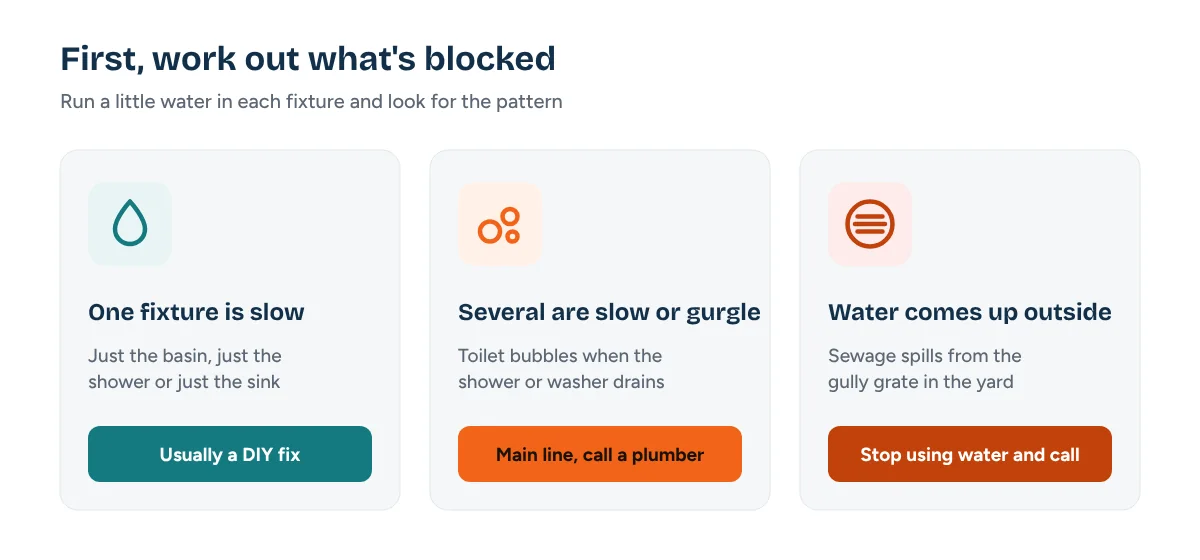
This one step saves more time and money than any tool. Run a little water in each fixture and notice what happens.
Only one fixture is slow. If just the bathroom basin or just the shower drains slowly, the blockage is almost always close to that fixture, in the plug hole, the grate or the trap underneath. That’s a good DIY job.
Several fixtures are slow or gurgling. If the toilet bubbles when the shower runs, or the laundry tub backs up when the washing machine empties, the blockage is further down, in the pipe they share. A plunger won’t reach it.
Water is coming up outside. If dirty water or sewage is spilling from the round grate in your yard, that’s the overflow relief gully doing its job. It means the main sewer line is blocked. Stop using water and call a plumber.
A quick word on the rules. In Queensland, unblocking sanitary plumbing and drainage is listed by the QBCC as work for licensed plumbers. The fixes below stick to what any householder does at the fixture: cleaning plug holes, using a plunger and clearing a trap designed to come apart by hand. Anything past that belongs to a licensed plumber.
What you’ll need
You don’t need special gear. Most of this is already in the laundry cupboard.
- Rubber gloves and an old towel
- A bucket
- A cup plunger for sinks and showers, and a flange plunger for the toilet
- A plastic hair-removal strip, or an old wire coat hanger with a small hook bent into the end
- Dishwashing liquid
- Bicarb soda and white vinegar
- A wet and dry vacuum, if you have one
Fix 1: Clean out the plug hole and grate
It sounds too simple, but this clears more bathroom blockages than anything else. Hair and soap scum knit together just below the plug and form a mat that water can barely get through.
- Remove the plug or shower grate. Most twist or lift out. Some have a single screw.
- Pull out what you can see with gloved fingers.
- Feed a plastic hair-removal strip down the drain, twist it and pull it back slowly. You’ll be surprised what comes up.
- Run hot tap water for a minute to flush the rest.
If you’re using a coat hanger, be gentle. Scraping hard can scratch a chrome plug or damage the trap below.
Fix 2: Hot water and dishwashing liquid for kitchen sinks
Kitchen sinks mostly block with fat. Cooking oil, butter and meat juices go down as liquid, cool in the pipe and stick to the walls. Food scraps then catch on the fatty layer.
- Squirt a good amount of dishwashing liquid into the drain.
- Follow it with a kettle’s worth of very hot tap water, or water that has been off the boil for a few minutes.
- Wait five minutes and repeat once.
Use hot water rather than boiling water if your pipes are plastic, and never pour boiling water into a toilet. It can crack the porcelain.
Fix 3: Use a plunger properly
A plunger works by pushing and pulling a column of water against the blockage. Most people don’t get a good seal, so most of that force is lost.
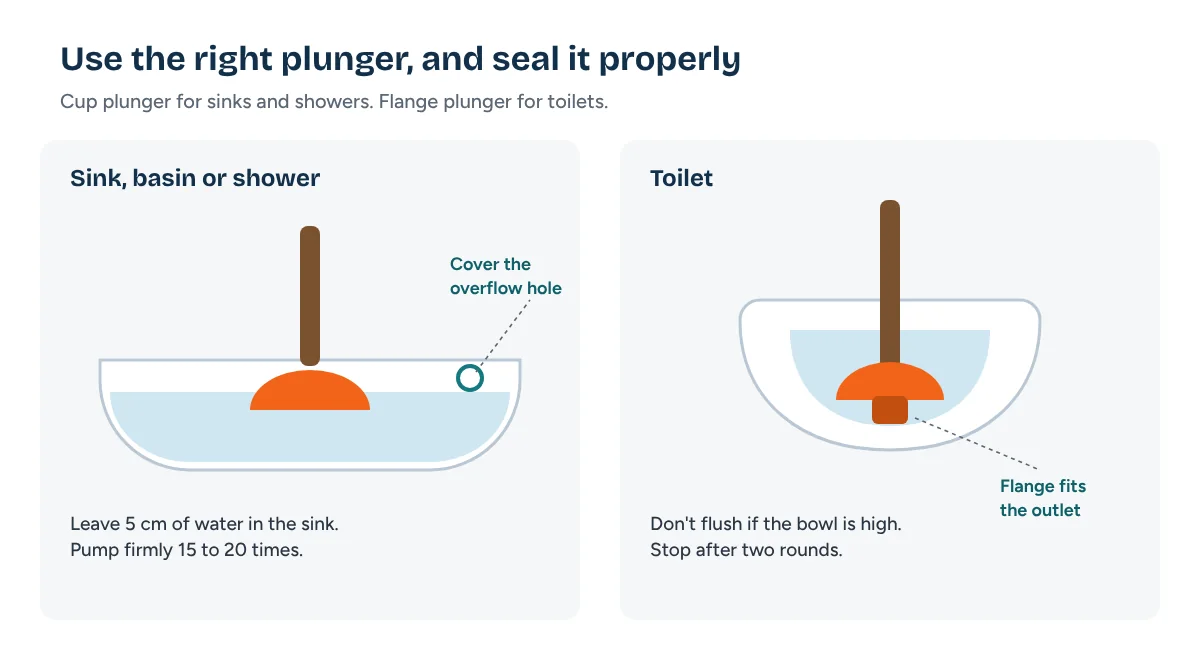
For a sink, basin or shower:
- Leave about five centimetres of water in the sink so the plunger cup is covered.
- Block the overflow hole with a wet cloth. In a double kitchen sink, block the other plug hole too.
- Press the plunger down slowly to push the air out, then pump firmly up and down 15 to 20 times without breaking the seal.
- Pull it off sharply and watch the water. If it rushes away, you’re done. If not, repeat a couple of times.
For a toilet:
- Use a flange plunger, the one with a rubber sleeve that fits into the toilet outlet.
- Make sure there’s enough water in the bowl to cover the cup. If the bowl is close to overflowing, don’t flush. Bail some water into a bucket first.
- Push in slowly, then pump firmly for 15 to 20 strokes.
- Flush once to test. If it starts to rise, stop flushing.
If a toilet is still blocked after two rounds, don’t keep going. Our page on blocked toilets on the Gold Coast explains what a plumber does next.
Fix 4: Bicarb soda and vinegar
Let’s be honest about this one. The fizz is satisfying, but bicarb and vinegar won’t shift a solid blockage. What it can do is loosen a light film of soap scum or grease, and it’s gentle on pipes. It’s best as a monthly clean, or as a follow-up after plunging.
- Pour half a cup of bicarb soda down the drain.
- Follow with a cup of white vinegar and put the plug in.
- Wait 20 to 30 minutes.
- Flush with very hot tap water.
Fix 5: Clean the trap under the sink
Under most bathroom basins and kitchen sinks is a curved or bottle-shaped trap. It holds a little water to stop sewer smells coming back into the house, and it’s also where heavy gunk settles. Many modern traps are designed to unscrew by hand for cleaning.
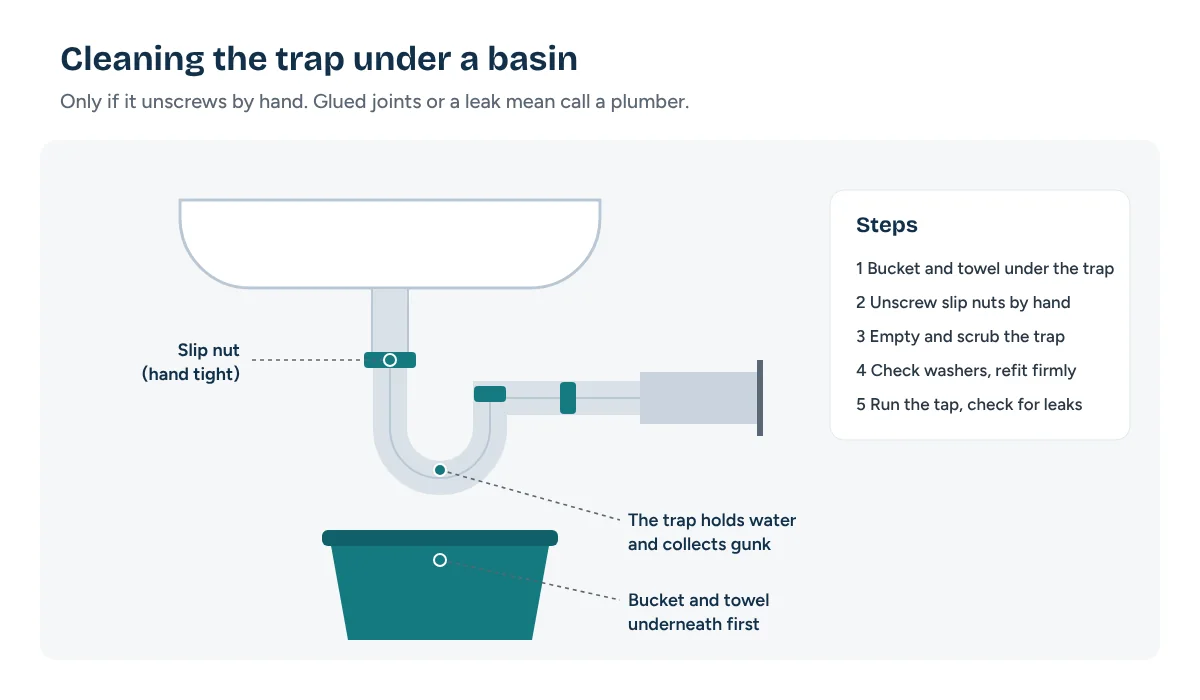
- Put a bucket and a towel under the trap. It’s full of dirty water.
- Unscrew the bottom cap or the slip nuts by hand. Don’t use a wrench on plastic fittings.
- Tip out the contents and clean the trap with an old toothbrush.
- Check the rubber washers are in place, then screw everything back firmly by hand.
- Run the tap and check for leaks.
If the trap won’t come apart by hand, the fittings are glued, or you see a leak afterwards, leave it for a plumber. A slow leak inside a cabinet can quietly rot the floor.
Fix 6: A wet and dry vacuum
If you own a wet and dry vacuum, it can pull out a blockage that a plunger only pushed around. It works well on showers and basins.
- Set it to wet mode and remove any filter bag.
- Make a tight seal over the drain with the hose. A rubber plunger cup with the handle removed can help.
- Block the overflow hole, then turn the vacuum on at full power for 20 to 30 seconds.
Don’t use a household vacuum cleaner for this. It isn’t built for water.
Quick tips by type of blocked drain
Different drains block for different reasons, so the best first move changes depending on where the blocked drain is.
Shower. Almost always hair and soap. Lift the grate, pull the hair out and finish with a plunger. A cheap hair catcher stops it coming back.
Bathroom basin. Hair, toothpaste and soap scum just below the pop-up plug. Remove the plug, clean it, then clear the trap underneath if needed.
Kitchen sink. Fat and food scraps. Hot water and detergent first, then the plunger with the second sink plugged. If you have a dishwasher, a blocked kitchen drain can also make it drain slowly.
Laundry tub. Lint from the washing machine. Clean the lint filter on the machine and check the tub’s strainer. If the tub backs up only when the machine empties, the blockage may be further down the line.
Toilet. Too much paper, wet wipes or something dropped in. Use a flange plunger and stop after two rounds. Never use chemicals in a toilet.
What not to do
Some popular “fixes” make things worse. Avoid these.
Caustic drain cleaners. They work on hair and grease in theory, but they rarely clear a proper blockage, and they sit in the pipe as a strong chemical. They can burn skin and eyes, damage older pipes and splash onto the plumber who has to clear the drain afterwards. Never mix two different cleaners, because some combinations release toxic gas.
Boiling water in a toilet. The sudden heat can crack the porcelain bowl.
Flushing again and again. If the bowl is rising, another flush just adds more water with nowhere to go.
Forcing a coat hanger deep into a toilet. It scratches the glaze and can jam in the bend.
Hiring a drain machine without training. A powered drain snake can kink, damage pipes and cause injury if it’s used wrongly. Drainage work is a licensed trade in Queensland for good reason.
When to stop and call a plumber
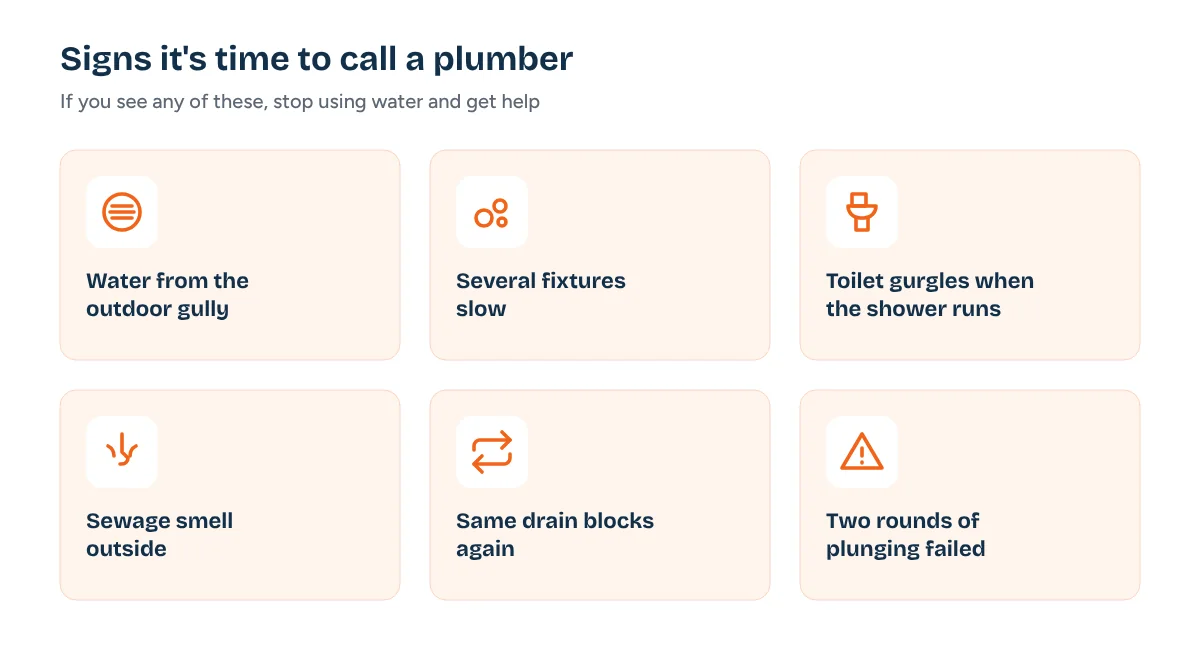
You’ve done everything a householder should do. Call a licensed plumber if any of these are true.
- Water or sewage is coming up through the overflow relief gully or an outside drain.
- More than one fixture is slow or blocked.
- The toilet gurgles or bubbles when the shower, bath or washing machine runs.
- You smell sewage outside, near the gully or along the path of the pipe.
- The same drain blocks again within weeks of being cleared.
- You’ve tried two rounds of plunging and nothing has changed.
Blockages that keep coming back are usually caused by tree roots or a cracked or sunken pipe. A plumber can run a camera through the line to find out. If roots are the problem, you’ll want to read our guides on pipe relining costs and what pipe relining involves.
About that grate in your yard
Most Gold Coast homes have an overflow relief gully, a round grate on a short pipe somewhere outside, usually near the bathroom or laundry. It’s set lower than your floor drains on purpose. When the sewer blocks, the grate pops up and the overflow spills outside instead of inside your house.
Under the plumbing standard, the top of the gully should sit at least 75 mm above the surrounding ground and at least 150 mm below the lowest fixture inside, according to the QBCC. Keep it clear. Don’t cover it with pot plants, mulch or pavers, and don’t let garden soil build up around it.
If the grate is lifted and there’s sewage around it, don’t push it back down. Stop using water and call a plumber.
Who pays for a blocked drain?
On the Gold Coast, homeowners are responsible for the pipes on their side of the property connection point. The City of Gold Coast is responsible for the pipe from that point to the sewer main. If the plumber finds the blockage is in the City’s section, they can report it on 1300 000 928 the same day, and you may be reimbursed up to $300 including GST. The City of Gold Coast sewer blockages page has the full conditions.
If you rent, a blocked toilet is an emergency repair under Queensland tenancy rules. Contact your property manager first. The Residential Tenancies Authority explains what to do if you can’t reach them.
How to stop it happening again
The best blocked drain is one you never have. A few habits make a real difference.
- Put strainers in the shower and kitchen sink. They’re cheap and catch most hair and food scraps.
- Wipe greasy pans with paper towel and put it in the bin before washing up.
- Never flush wet wipes, even ones labelled flushable. They don’t break down like toilet paper. The City of Gold Coast won’t reimburse blockages caused by them either.
- Run hot water and a squirt of detergent down the kitchen sink once a week.
- Plant trees well away from the sewer line. If you’re not sure where it runs, a plumber can trace it with a camera.
How to clear a blocked drain: the short answer
How to clear a blocked drain comes down to three steps: work out what’s blocked, try the simple fixes at the fixture, and know when to stop. Clean the plug hole, plunge properly, clear the trap if it’s designed to come apart, and skip the chemicals. If water is coming up outside or several fixtures are affected, the blockage is in the main line, and that’s a job for a licensed plumber.
Frequently asked questions
What is the fastest way to clear a blocked drain?
For a sink or shower, remove the plug or grate and pull out any hair and soap scum, then use a plunger with the overflow hole covered. That clears most fixture blockages in a few minutes.
Does bicarb soda and vinegar unblock drains?
It can loosen a light build-up of grease and soap in a sink or shower, and it's safe for pipes. It won't shift a solid blockage, wet wipes or tree roots.
Is it safe to pour boiling water down the drain?
Not into a toilet, and not repeatedly into plastic pipes. Boiling water can crack a porcelain toilet bowl and soften PVC joints. Very hot tap water is safer and usually works just as well on grease.
Why is my drain still blocked after plunging?
The blockage is probably further down the pipe, beyond the reach of a plunger, or it's in the main sewer line. If more than one fixture is slow, or the outdoor gully is overflowing, call a plumber.
Who pays for a blocked drain in a rental property?
In Queensland, a blocked or broken toilet is an emergency repair, so tell your property manager straight away. If the tenant caused the blockage, for example by flushing wipes, the landlord may ask them to pay.
How often should I clean my drains?
Clean shower and basin strainers whenever you see hair building up, and run hot water with detergent down the kitchen sink once a week. A monthly bicarb and vinegar flush is a good habit for drains that tend to run slow.
About this guide
Written by the Gold Coast Drain & Pipe team and last checked on 29 October 2026. Prices come from current Australian price guides and include GST. Your plumber confirms a firm price before starting any work.
Gold Coast Drain & Pipe is a referral service. We connect you with one licensed, independent Gold Coast plumber and don't carry out plumbing work ourselves. How our service works.
Sources